Portrait of Lord Donounghmore
Technical Details
-
Title
Portrait of Lord Donounghmore -
Author
Joshua Reynolds -
Year
1780 – 90 -
Dimensions
cm 127,1 x 101,3 -
Inventory
Reg. Cron. 2244
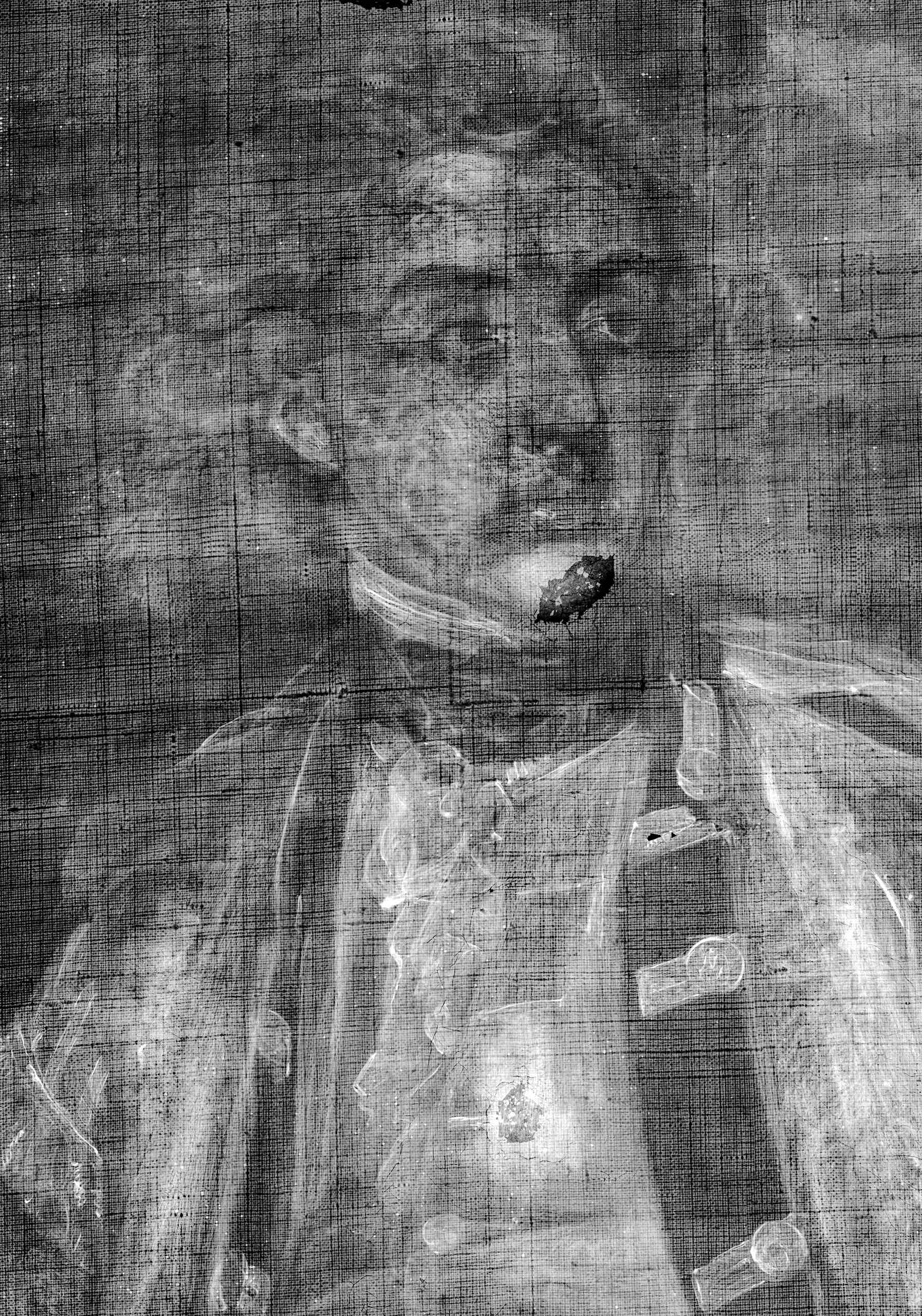
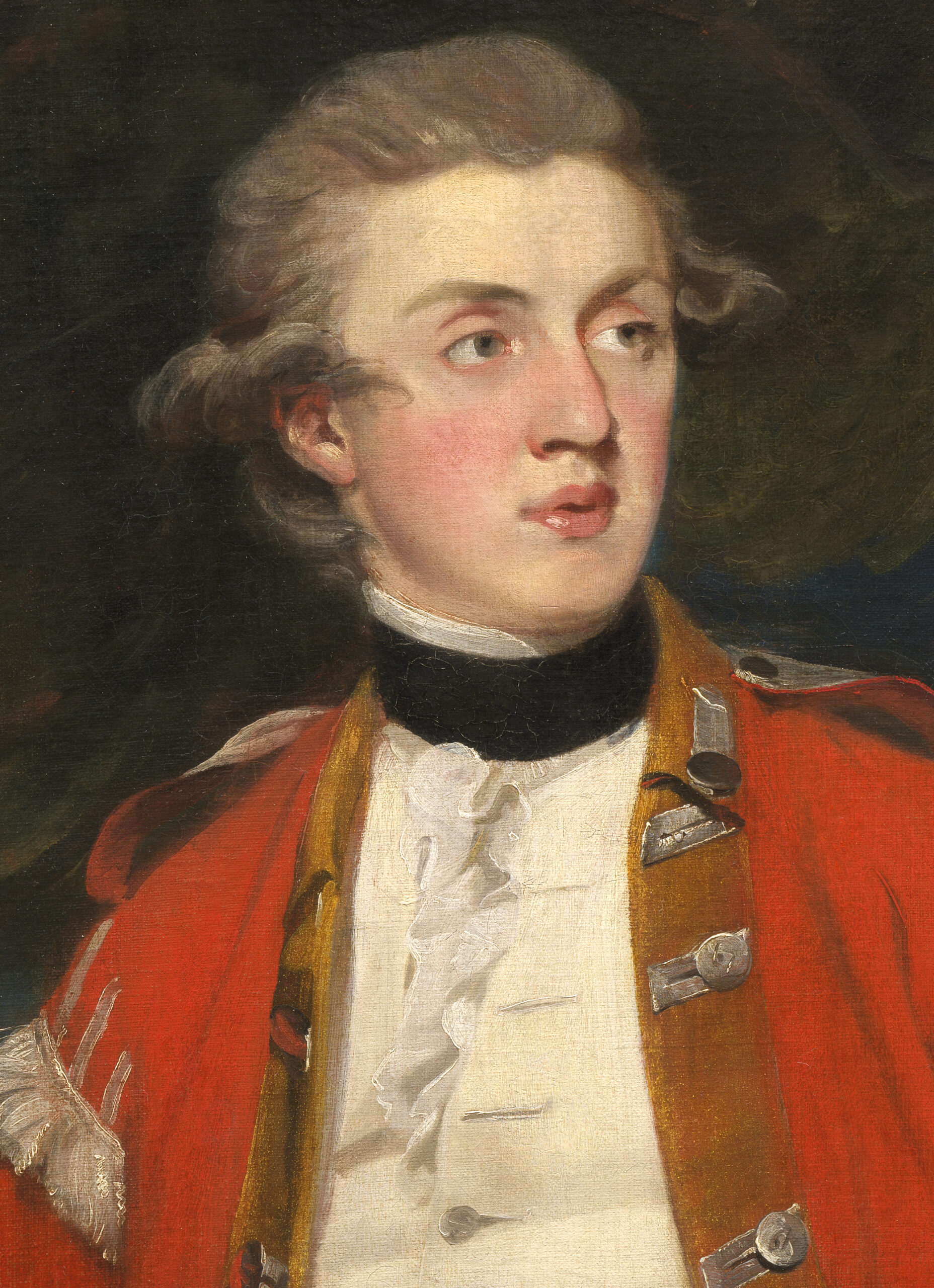
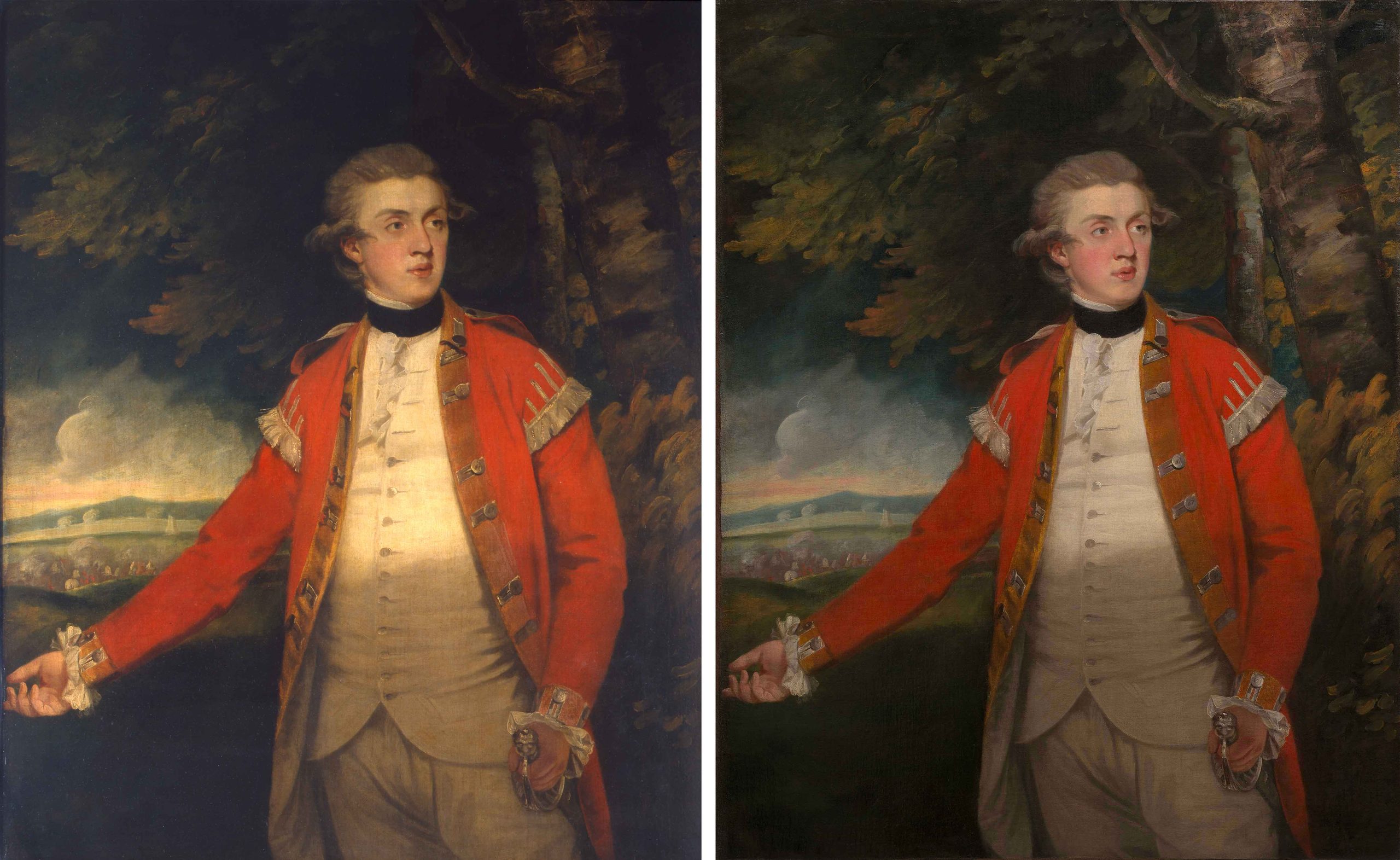
Restoring a painting by Reynolds (fig. 1) is overall known to be a challenge, especially if no conservation treatment has been done in the last period. This painter was known to be an experimenter who used varnishes and melgips in order to obtain special pictorial effects. But using resins, wax mixed with pigments, and working “wet in wet” has produced many conservation problems on his paintings. Therefore the restoration has begun with a complete diagnostic campaign and interchange with colleagues of the London National Gallery who have a great experience on the author while in Italy there is almost no information about him; infact our portrait is arrived in Italy in 1933 thanks to Ettore Modigliani who wanted to buy a canvas by Reynolds which is almost absent in Italian museums.
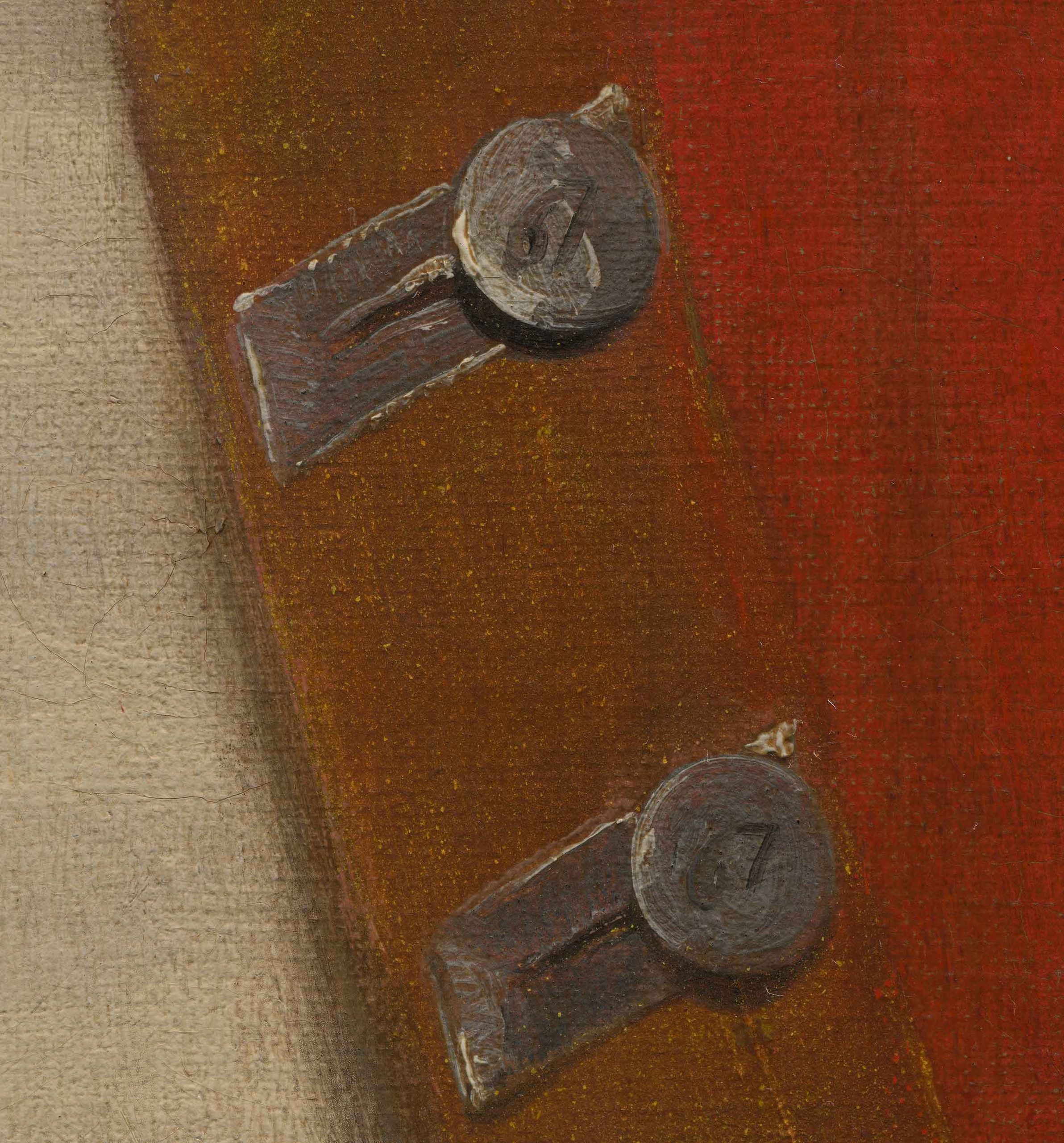
The lord depicted has long been identified as the first Lord of Donoughmore but, thanks to the last restoration, we now suggest that he is his brother, the second Earl of Donoughmore, captain of the “67” Regiment of Foot identified by the numbers on his coat buttons (fig. 2).
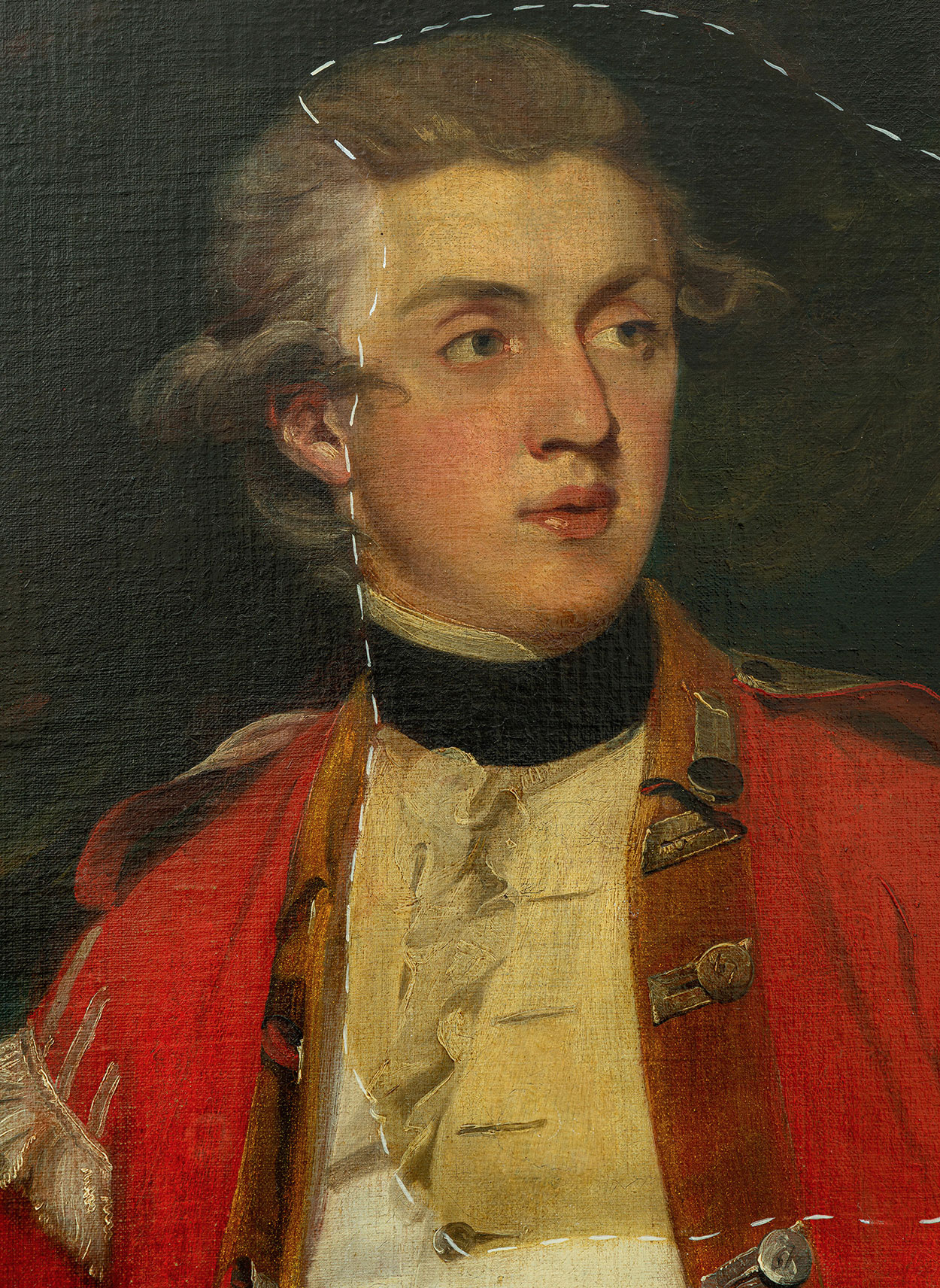
Cleaning the painting has also revealed many damages, but now focus your attention on two large losses (fig. 3): one on his chin and the other right in the middle of his heart. Here the cleaning has revealed the original color covered with overwhelming retouchings (fig. 4); now we offer a new, reversible, reconstruction, recognizable by little vertical hatchings, done with varnish pigments (fig. 5). Protective varnish coatings have been applied with the aim of not obscuring the varied nature of the painted surface, thereby respecting the artist’s technique.
We can state that working on a Reynolds painting has been a special professional experience of research and exchange studies, we hope that further studies will give more information to the story of this Lord “wounded” in the heart.